
Drinking Water Testing
Drinking Water Testing in Nepal
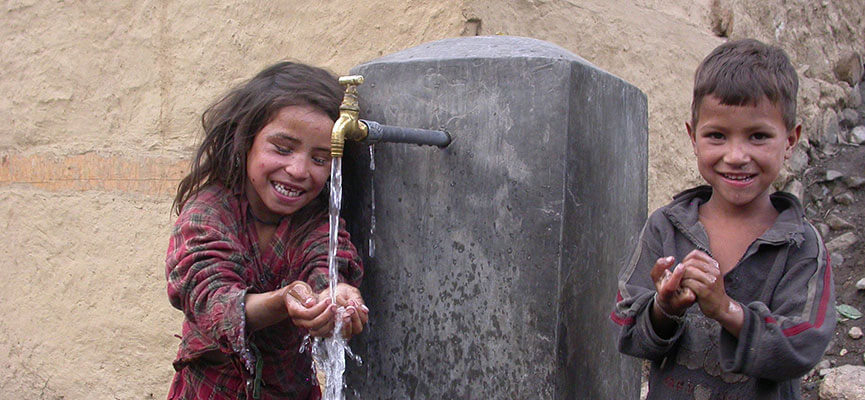
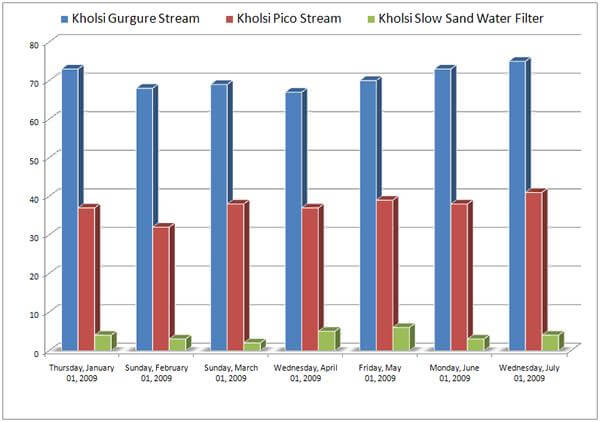
Since 2005, RIDS-Nepal has provided drinking water to villages in Humla. Each village has 2–5 public water taps supplied by local streams or spring sources. Additionally, every household receives a Slow Sand Water Filter (SSWF) to ensure safe drinking water. Today, 15 villages benefit from this program, with water from the source, public taps, and SSWFs regularly tested for E. coli.
Understanding E. coli
E. coli (Escherichia coli) is a type of bacteria found in the intestines of humans and animals. Its presence in water signals recent sewage or animal waste contamination. To detect E. coli, water samples are carefully collected and filtered. Sterile membranes capture bacteria, which are then incubated at 44°C for 16–18 hours. After incubation, the colonies are counted.
In Humla, water is considered safe if E. coli is below 10 per 100 ml. Testing demonstrates the effectiveness of the SSWF, which has dramatically improved water safety and health outcomes in villages such as Kholsi.
Measuring Turbidity
Turbidity measures the cloudiness of water caused by suspended particles, similar to smoke in air. To assess turbidity, water is added to a calibrated tube until a black mark at the bottom becomes visible. The corresponding measurement on the scale indicates whether water is clear (<1000 TU) or turbid (>1000 TU).
Impact of Water Testing
The combination of SSWF installation and regular water testing ensures safer drinking water in Humla. Villagers now have access to cleaner water, which reduces waterborne diseases and improves overall health. This project is part of RIDS-USA’s broader Holistic Community Development (HCD) approach, alongside pit latrines, smokeless stoves, and greenhouses.
For more on global water quality standards, see the World Health Organization’s water safety resources. To explore related initiatives, view our pit latrines project.